
Please submit your pledge by April 25, 2026!
Proposed Projects
The projects we hope to fund through the 2026 capital campaign — in keeping with our core values and commitments to make the church both more welcoming and greener — include the following (in no particular order):
- Make access to the Common Room and Rear Garden more inclusive
- Replace the HVAC system for the rear addition
- Repair and upgrade the fire suppression System
- Install a backup generator
- Repair and update the organ
- Replace the kitchen range
- Improve the acoustics in Rooms 201 and 204
- Improve accessibility in the Parsonage with a bathroom upgrade and additional doors
To make the greenest possible choices for some of these projects while being fiscally responsible — goals that can conflict and require trade-offs — we enlisted a decarbonization consultant, GreenerU, to help us understand the complexities and interdependencies involved. Click here to learn more about why we hired GreenerU.
Why hire a consultant?
The First Parish in Bedford congregation has made a commitment to be a “Green” Sanctuary. It’s one of the ways we “walk the walk,” and the Capital Campaign Committee takes that commitment seriously.
Along with that, we understand we owe it to the congregation to be as fiscally responsible as possible. However, being fiscally responsible and being green can be in conflict, and there will need to be trade-offs. Ultimately it will be up to the congregation to decide which trade-offs will be necessary, but we must first understand what they are. The Capital Campaign is committed to accurately presenting the trade-offs to you.
As we began to explore different options, it became obvious that this stuff is complicated! There could be a chance to look to the future. There may be options that are out of reach now, but could we design systems to build on and make greener in the future? The more we explore, the more we find competing interests, and that makes us hesitant to select a recommended course of action only to discover it could be the wrong thing. To quote Donald Rumsfeld (I hate to do it, but he’s right): “We don’t know what we don’t know.” We don’t want to get bogged down with “decision paralysis,” but we do know we need help to ask the right questions! We need some expertise.
So, to ensure we are giving the congregation realistic options that are grounded in reality, even if there are real trade-offs, we felt it was important and would be money well spent to enlist experts who can help us understand the complexities and interdependencies, so we have choices with the benefit of experts behind them.
Why hire GreenerU?
Fortunately we found an organization, GreenerU, who describes themselves as follows:
Your mission. Our expertise. A shared path to a decarbonized future. At GreenerU, we help mission-driven institutions reduce greenhouse gas emissions and move toward decarbonization. Whether you’re just getting started or already under way, we bring the technical know-how and strategic insight to move your vision forward.
GreenerU has done this before. They come highly recommended, and our meetings so far with them have been very encouraging. They understand our aspirations, they understand the complexities and tradeoffs for green projects, and understand our limitations.
You can read more about GreenerU at https://www.greeneru.com/.
Make Access to the Common Room and Rear Garden More Inclusive
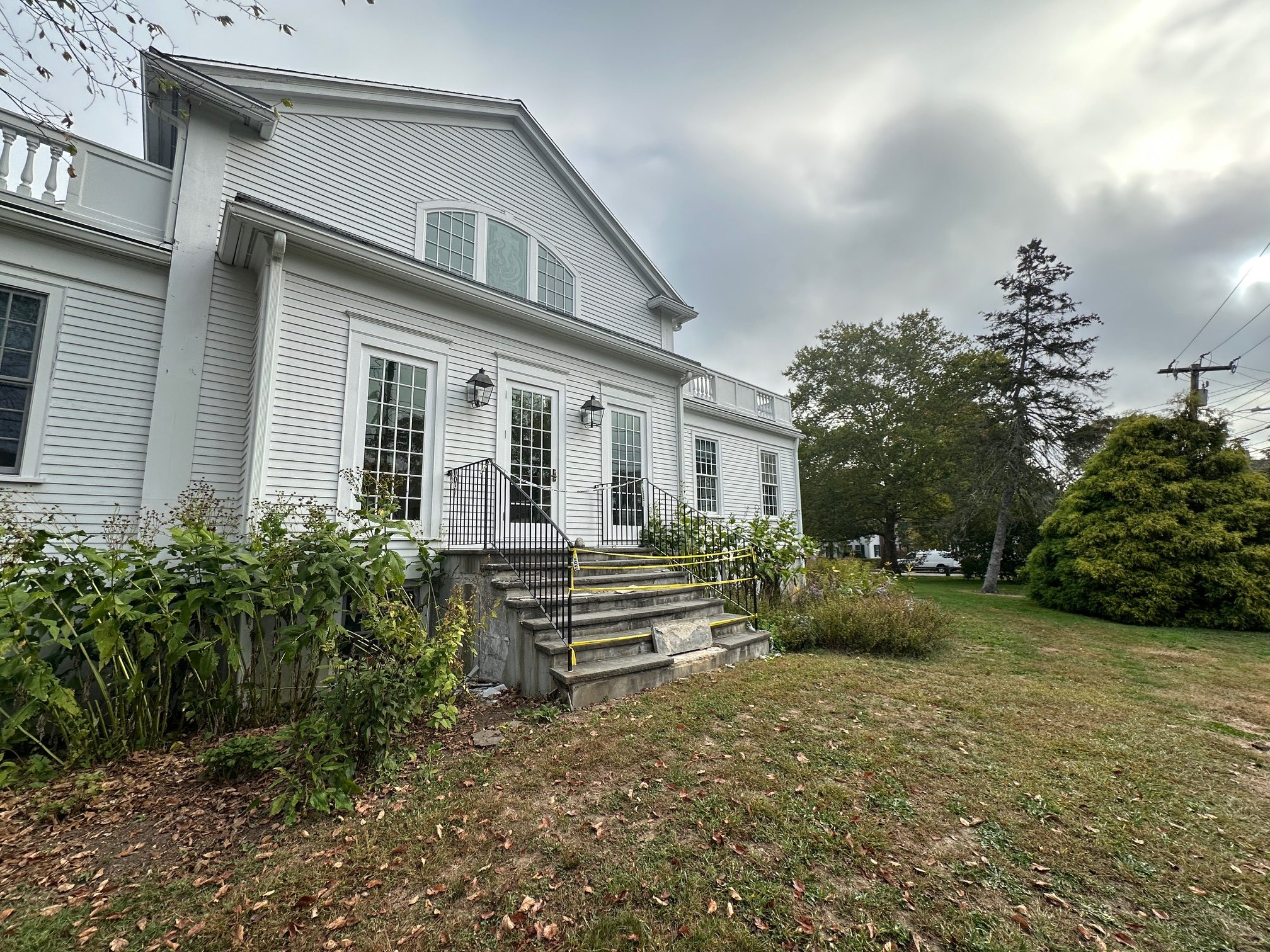
As a community, we value inclusion in all aspects of our lives together, but the stone steps between the Common Room and the Rear Garden are not accessible for mobility impaired people, and the ground in that area is uneven. Social gatherings that spill into the yard cannot include everyone. In the event of a power outage, wheelchair users need to wait for emergency responders to exit the building. Options to improve access include installing a battery-operated outdoor wheelchair lift or an ADA-compliant ramp and adding a backyard patio or ground stabilization with possible landscaping.
Replace the HVAC System for the Rear Addition

The rear addition to the historic 1817 building has four gas-fired rooftop units that provide heating for the newer part of the building. Three of the four units are 25 years old and at imminent risk for failure. Large parts of the rear addition could suddenly go without heat, which may lead to frozen pipes, limited use of the building, and emergency services costs. The rear addition HVAC system could be replaced with several options, including an in-kind gas-fired rooftop unit replacement, air-source heat pumps, or a geothermal system. Additional energy conservation measures (e.g., lighting upgrades and building envelope improvements) are also under consideration.
Repair and Upgrade the Fire Suppression System
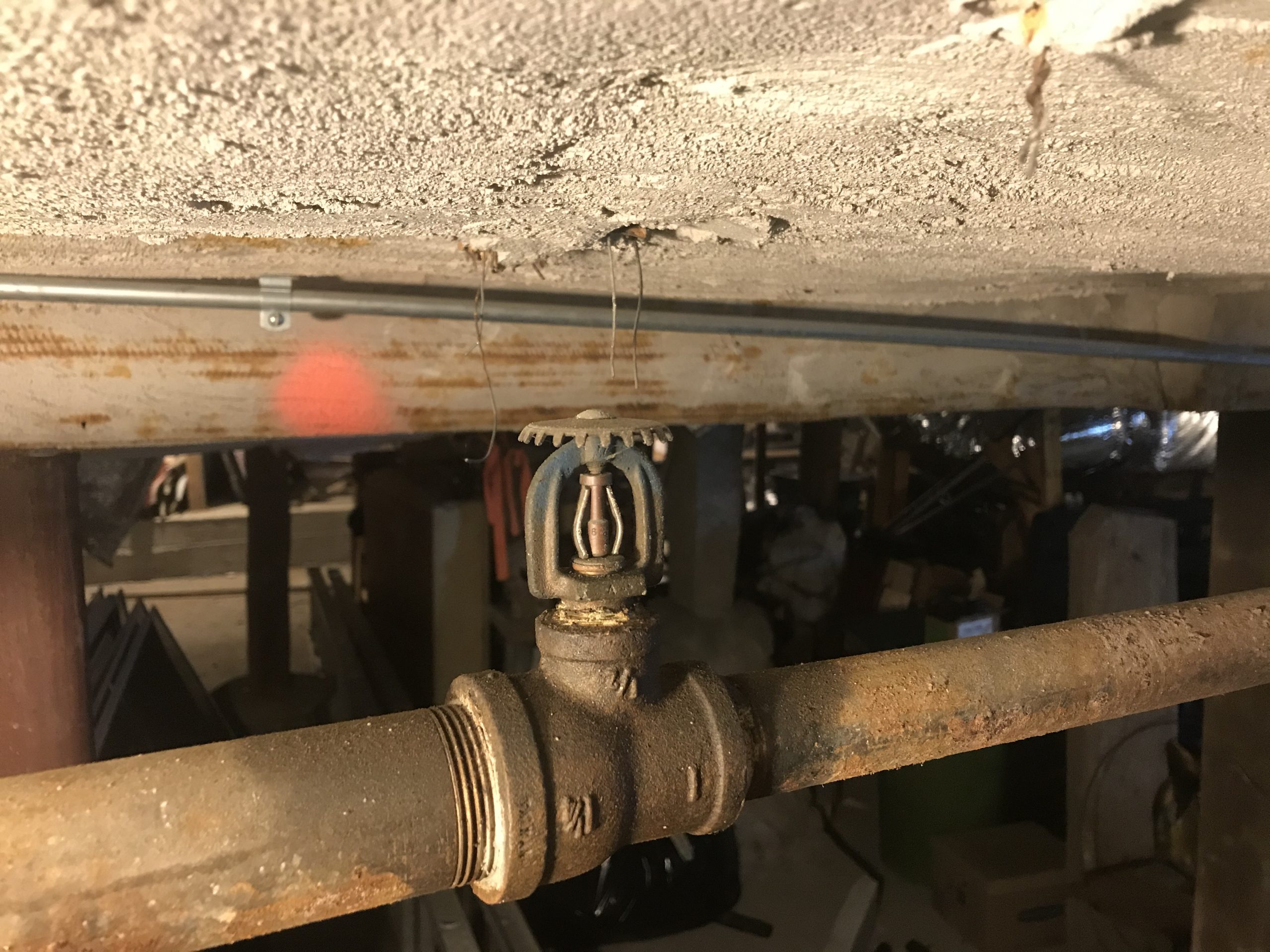
The fire suppression system was installed 50 years ago. It is a “dry” system where air keeps valves closed to avoid water freezing during wintertime. An electric-powered compressor counters micro-leaks to maintain pipe air pressure. During heat detection events, water is supposed to be released to put out fires — but this aging system has been experiencing more and more leaks and the possibility of expensive repairs. The risk of inadvertent flooding during power outages is rising over time. Pipe repairs and replacement have been ongoing, but some more significant system upgrades are recommended in addition to more pipe repairs.
Install a Backup Generator
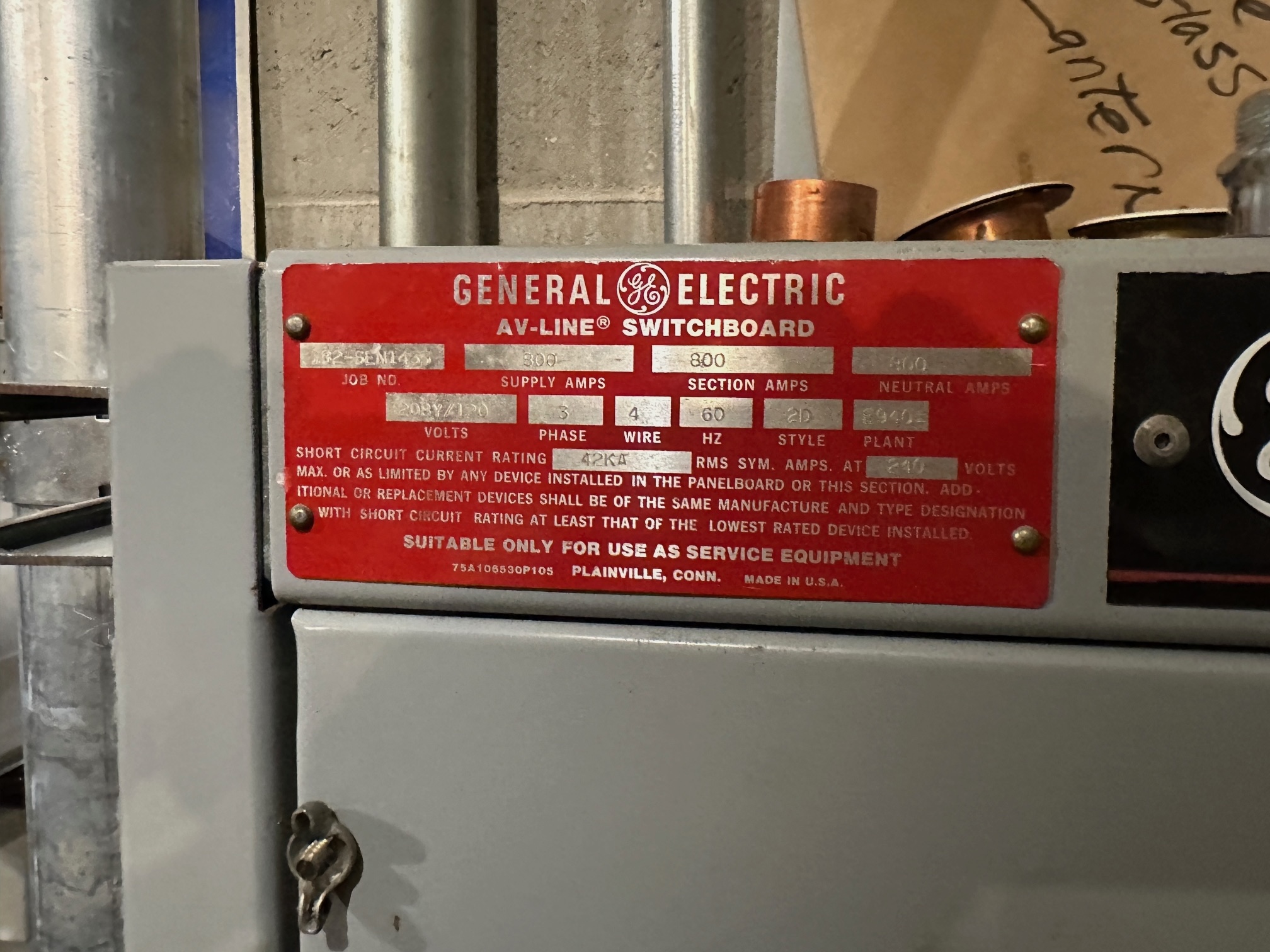
First Parish does not have a backup power system in the event of a power outage. This puts people at risk, particularly those with disabilities, who rely on the elevator to evacuate the building safely. The fire suppression system also puts our building at risk of water damage without electricity to power the air compressor that keeps the pipes clear of water. We have been considering many options for several years, and with our consultant, GreenerU, we are developing a plan. Options that have been considered so far include battery storage, a gas-fired emergency generator, and a diesel-fueled emergency generator. We are looking into putting this new equipment in the vault located near the Elm Street entrance.
Repair and Update the Organ
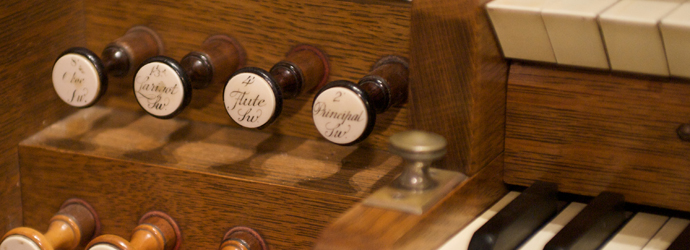
First Parish has a 139-year-old G.G. Hook & Hastings pipe organ with entirely mechanical parts, which can be laborious to maintain and which very few companies can service. Many parts are original and, despite careful care, are badly in need of repair to ensure the organ’s viability for the next 50 years. If left unaddressed, the organ could suddenly stop working and require expensive emergency repairs. We would like to use Capital Campaign funds for an overhaul of the organ by its longtime maintenance provider that is already planned for the summer of 2026 .
Replace the Kitchen Range
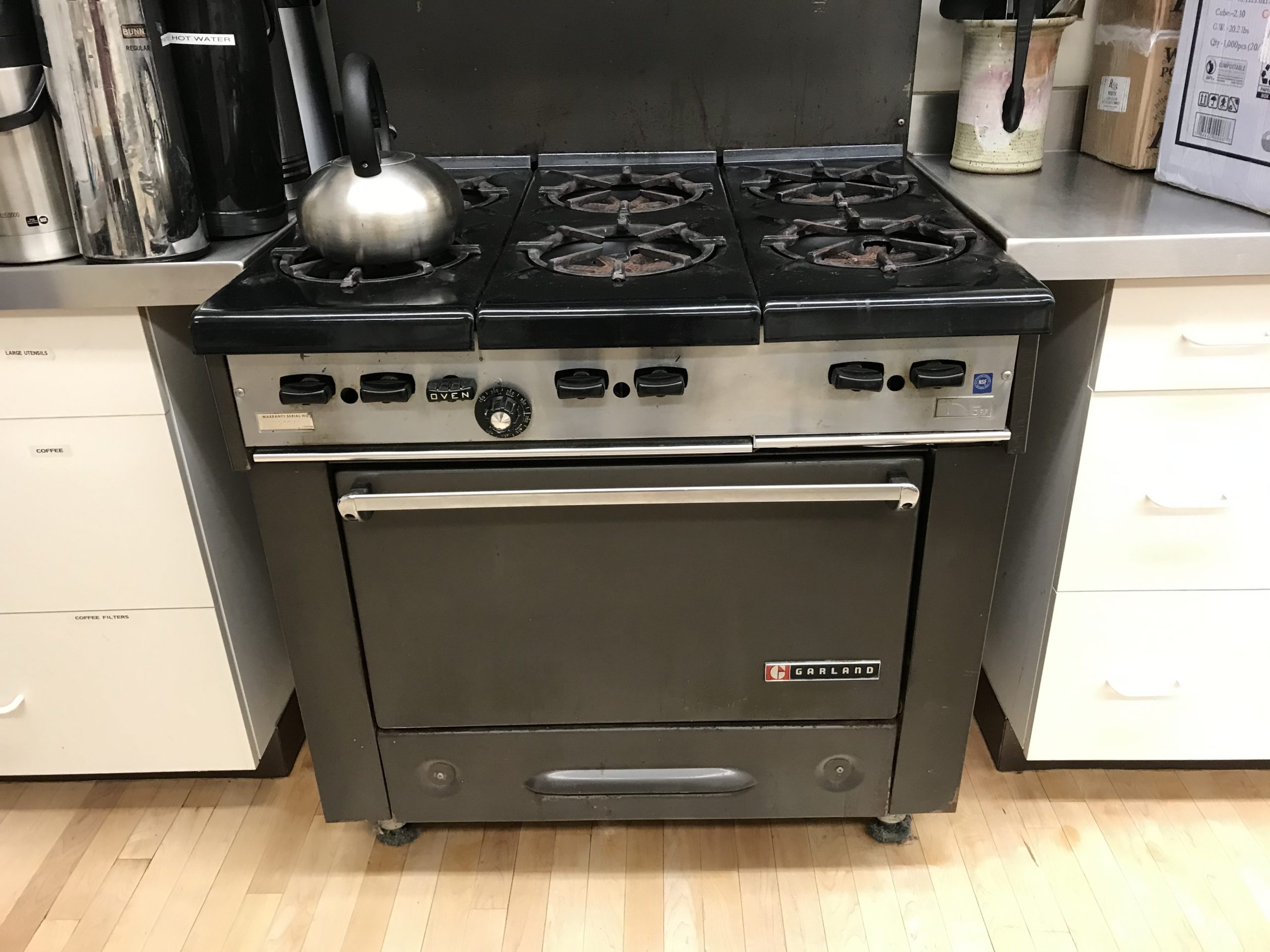
The gas-fired range in the Common Room kitchen is more than 20 years old and has some leaks. The stove could be replaced in kind (with natural gas), replaced with an electric stove/oven, replaced with an induction cooktop, or removed altogether. Replacement may also require additional kitchen cosmetic upgrades. All solutions will factor in user safety. Electric solutions may require an electric capacity upgrade.
Improve the Acoustics in Rooms 201 and 204
- Room 201 serves as a living space for families served by First Parish. The space has laminate flooring, no curtains, and a small area rug. Noise, primarily from babies and children, is audible in other second-floor locations and can be disruptive and distracting for office staff. Sound mitigation could be achieved most cheaply through carpeting and padding. Acoustic paneling would be another step, and the maximum noise dampening efforts would involve demolishing the office ceiling and installing acoustic soundproofing material.
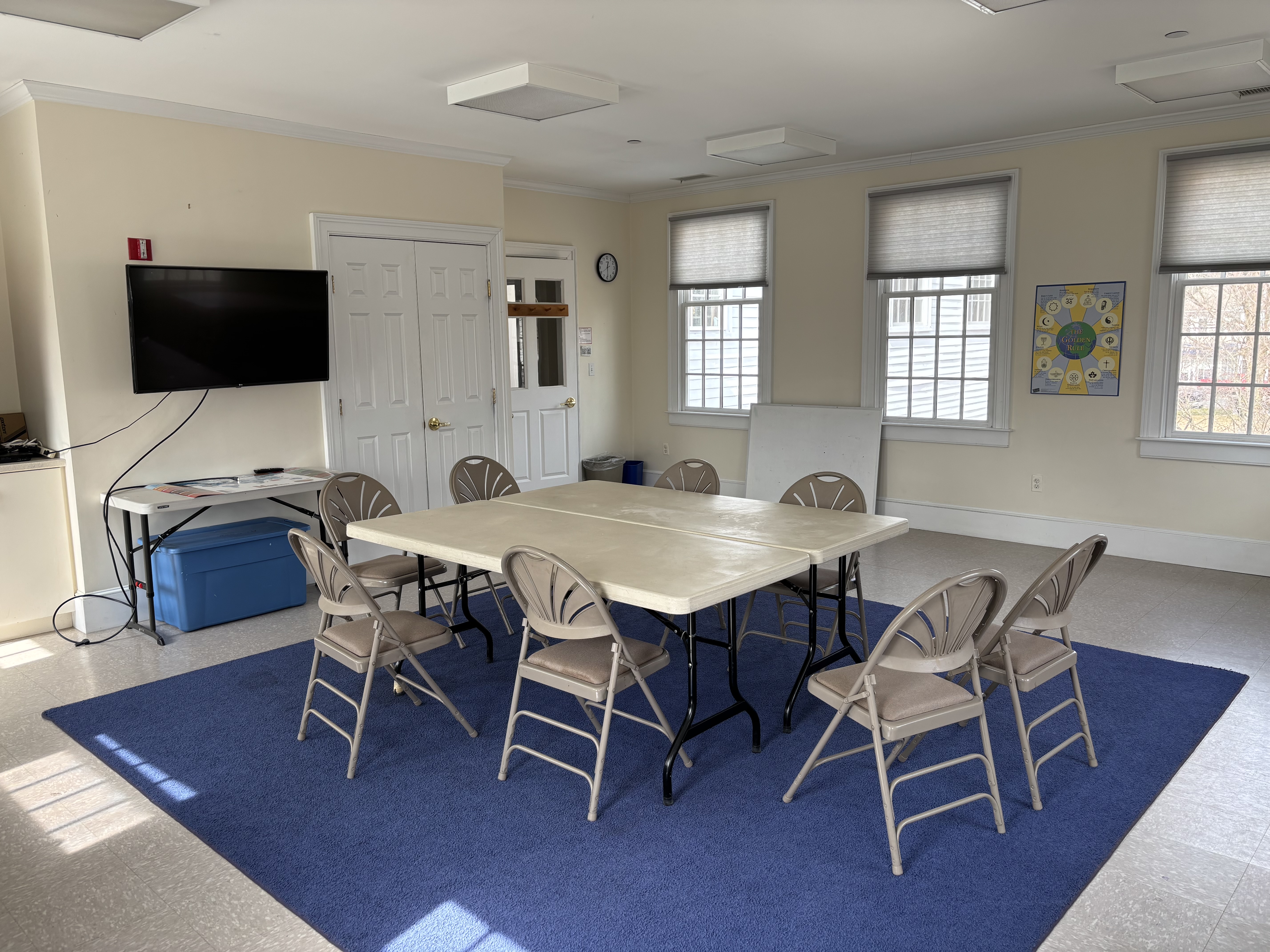
- Room 204 is one of the most heavily used rooms in the building with meetings taking place in the space most weeknights. For participants meeting in person or on Zoom via our Owl camera, sound bouncing off the many windows and other hard surfaces in the room can make it hard to understand what people are saying. Possible improvements could include carpeting, acoustic wall panels, and ceiling treatments.
Improve Accessibility in the Parsonage with a Bathroom Upgrade and Additional Doors
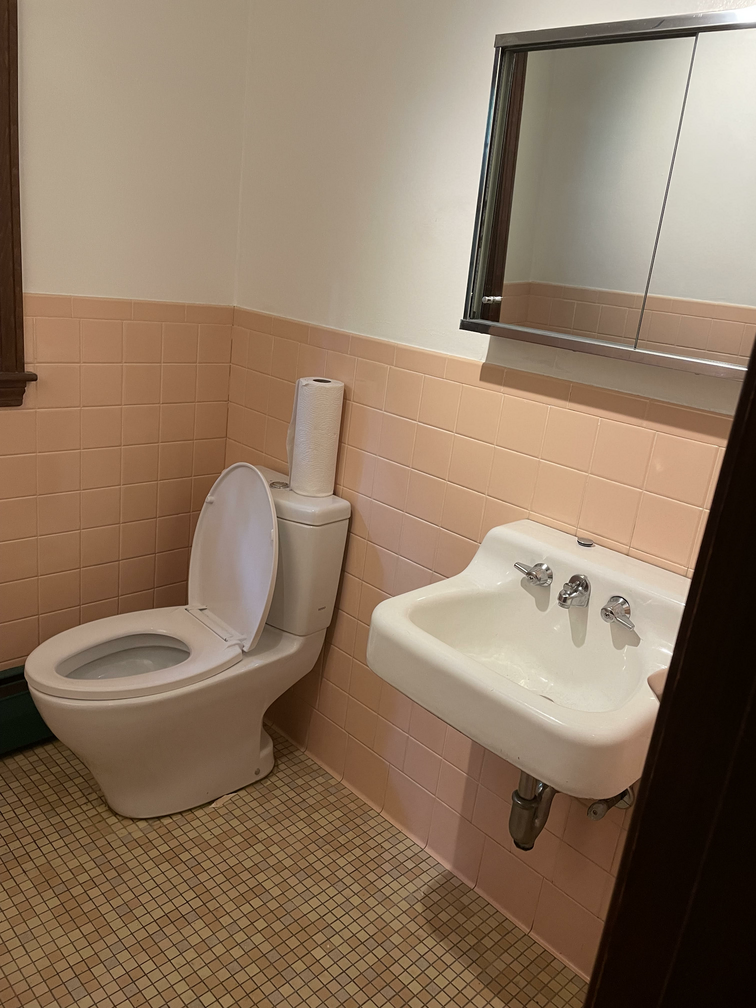
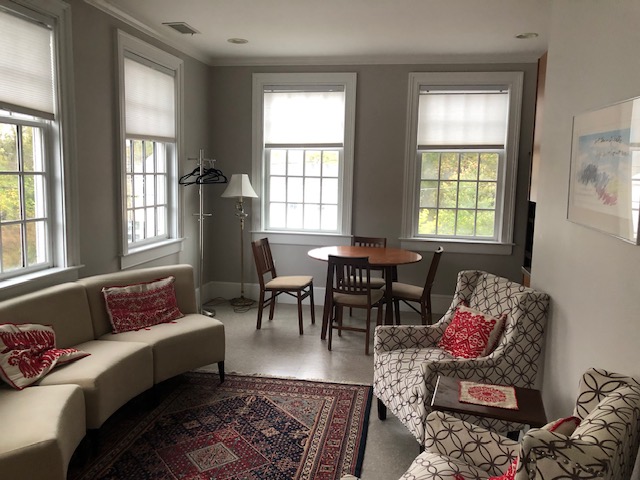
The Parsonage, where the Senior Minister lives, also hosts immigrant families. Currently, there is only a half bath on the first floor, so anyone with a disability who cannot climb a flight of stairs is also unable to reach the second-floor bathroom to shower. In addition, there is currently no door to separate the first-floor living room and an additional room, which limits the space’s use due to noise and lack of privacy. Upgrading the first-floor half bath to a three-quarters bath, which would include a shower that could accommodate individuals with disabilities, would improve accessibility. Installing double doors between the first-floor living room and the additional space would enable them to be used together or separately, creating more options for use of the spaces.